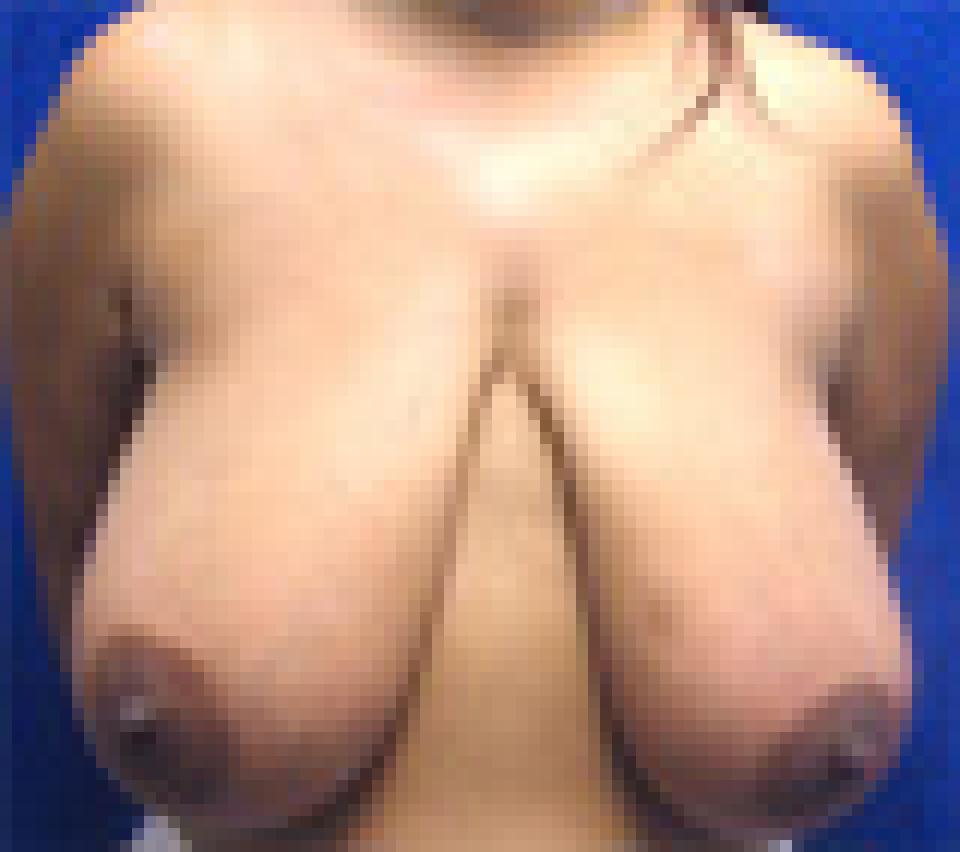
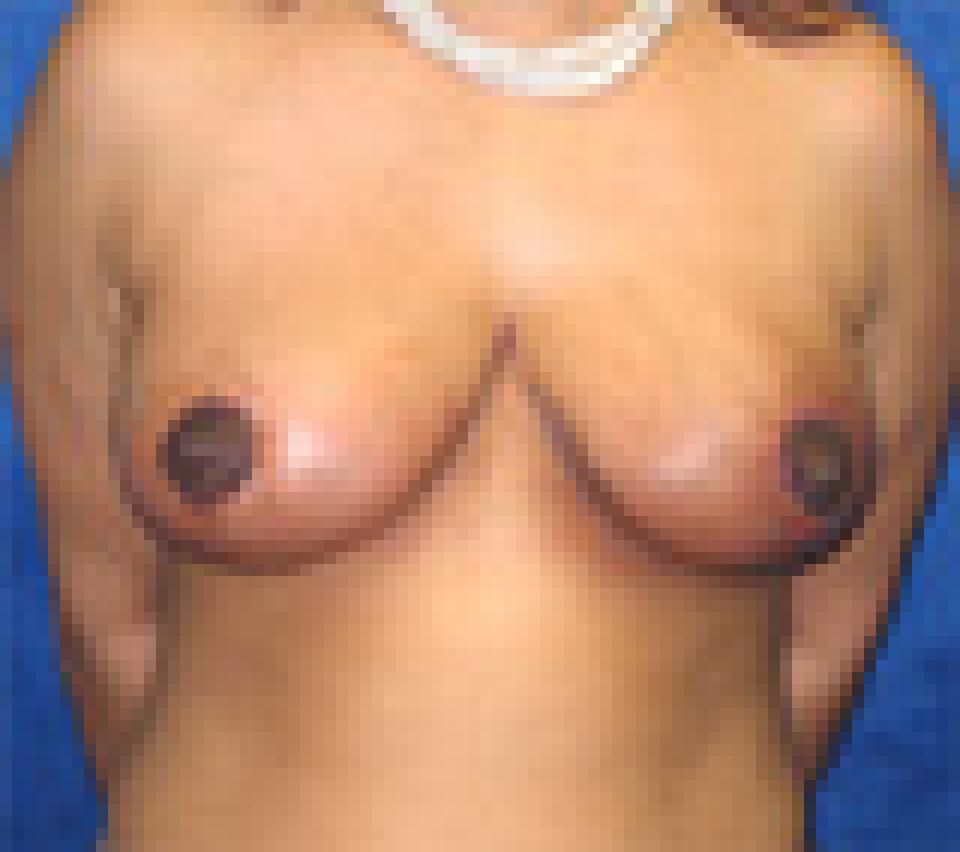
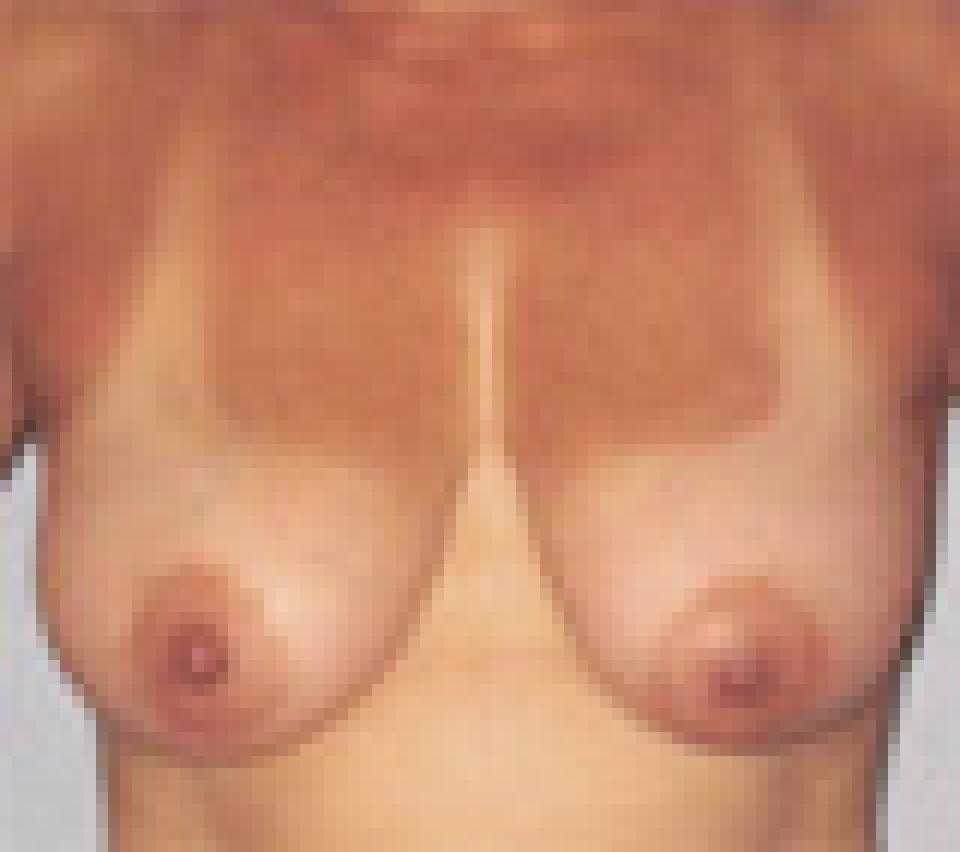
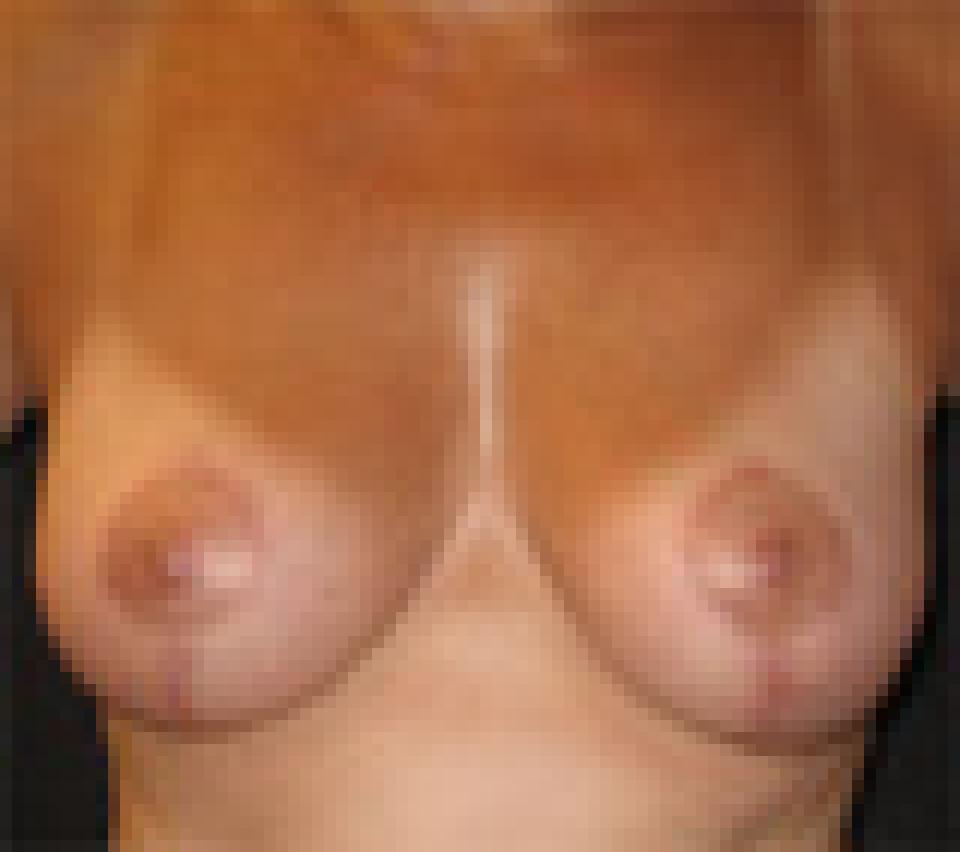
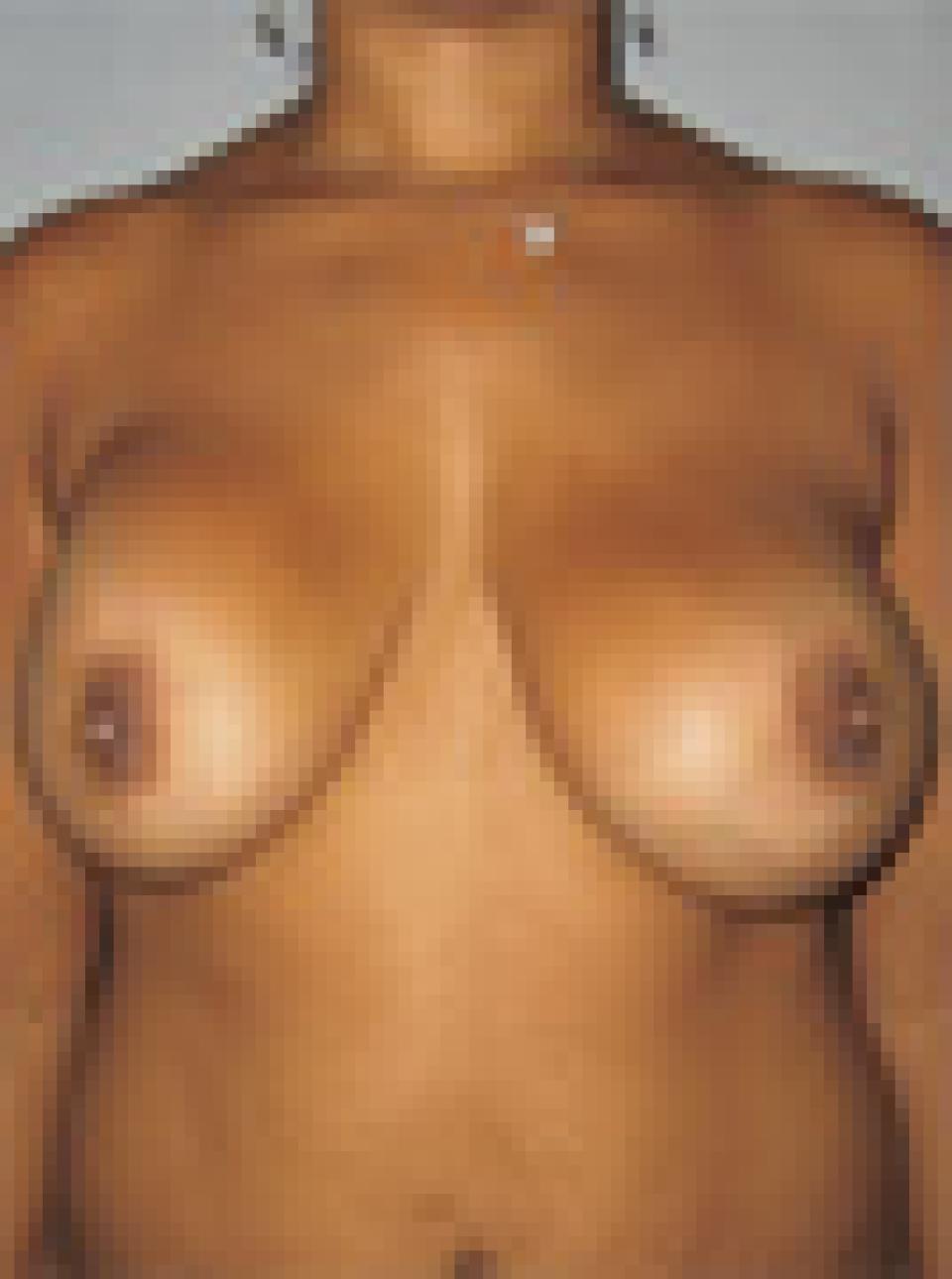
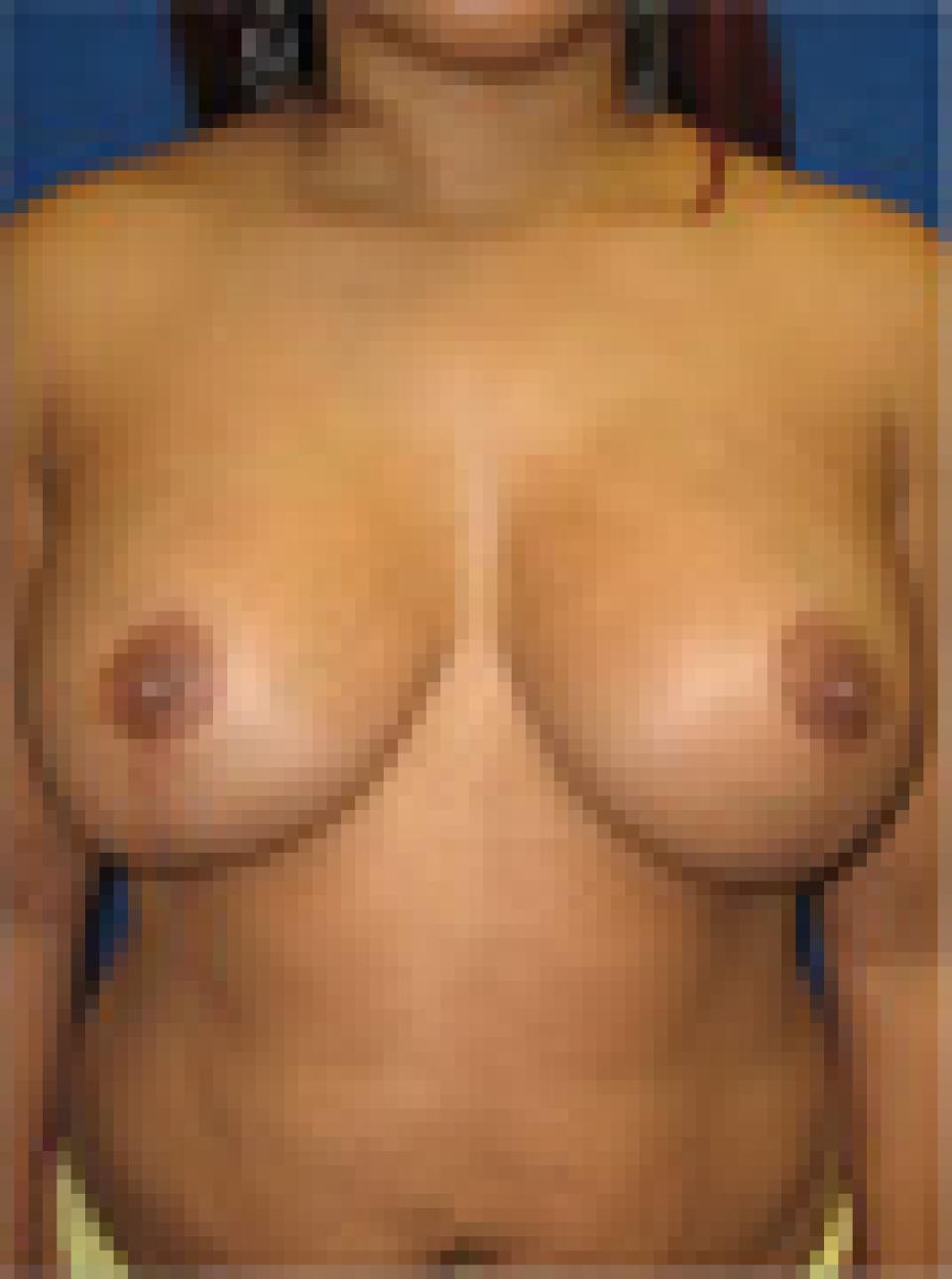
This case depicts a 29 year old woman with symptomatic breast hypertrophy who underwent a breast reduction using the inverted T or "anchor" incision pattern. Because of this individual's symptoms, medical insurance covered a portion of the costs of this procedure.
Not only did her symptoms improve following surgery, but she also gained a more aesthetically proportionate breast. Her post-operative photographs show her appearance approximately one month after surgery.
This case depicts a 52 year old woman who was happy with her breast size, but wished to have more shapely breasts. She underwent a short scar or "lollipop" incision breast lift. No implant was needed to achieve the breast size and shape she ultimately achieved.
The post-operative photographs depict her appearance at 9 months after surgery.
If a woman wished to have only a slightly larger bust size or slightly more fullness in the upper half of the breast, then a small implant may be added at the same time that the breast lift is performed.
This case depicts a 37 year old woman who had borne one child and had noted that her breasts had begun to sag and develop a deflated appearance.
She underwent a vertical or "lollipop" incision breast lift along with placement of 300 cc smooth, round saline implants beneath the pectoralis muscles. Her post-operative photographs depict her appearance approximately one year after surgery.
This case study also demonstrates how the nipple and areolar positions located too low and too close to the midline in this case, can be improved as part of the procedure.
This case depicts a 47 year old woman who had borne two children and felt that her breasts had developed a sagging and deflated appearance.She underwent a vertical or "lollipop" incision breast lift along with placement of 300 cc smooth, round saline implants beneath the pectoralis muscles.
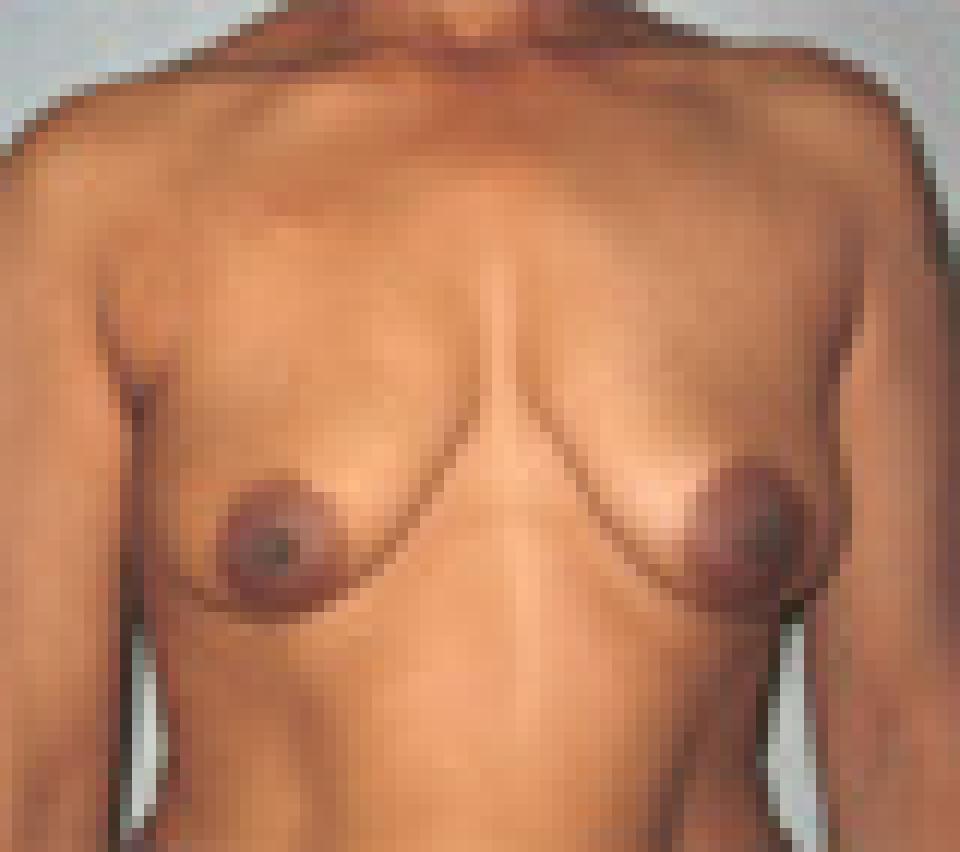
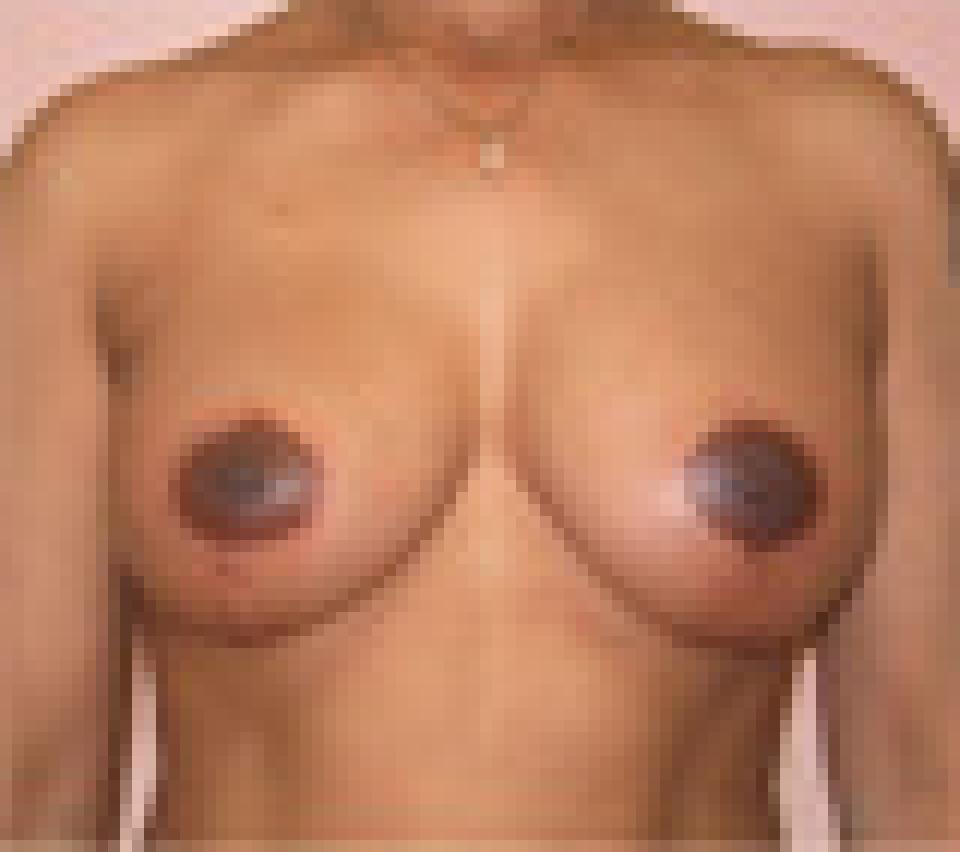
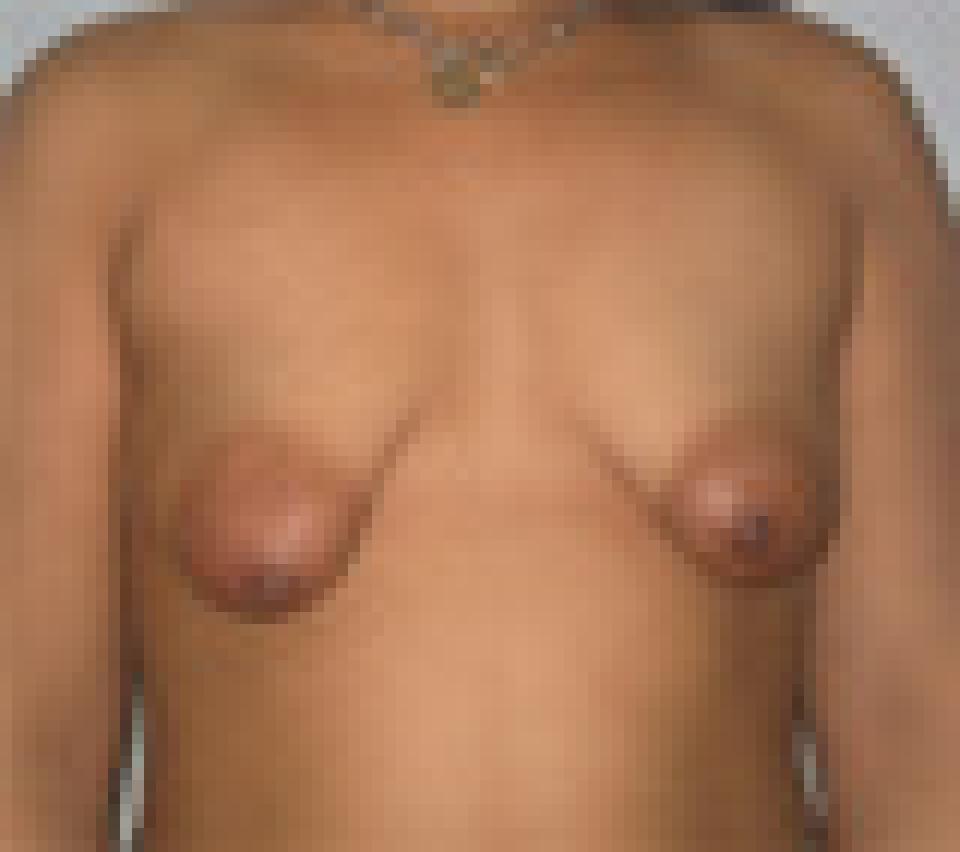
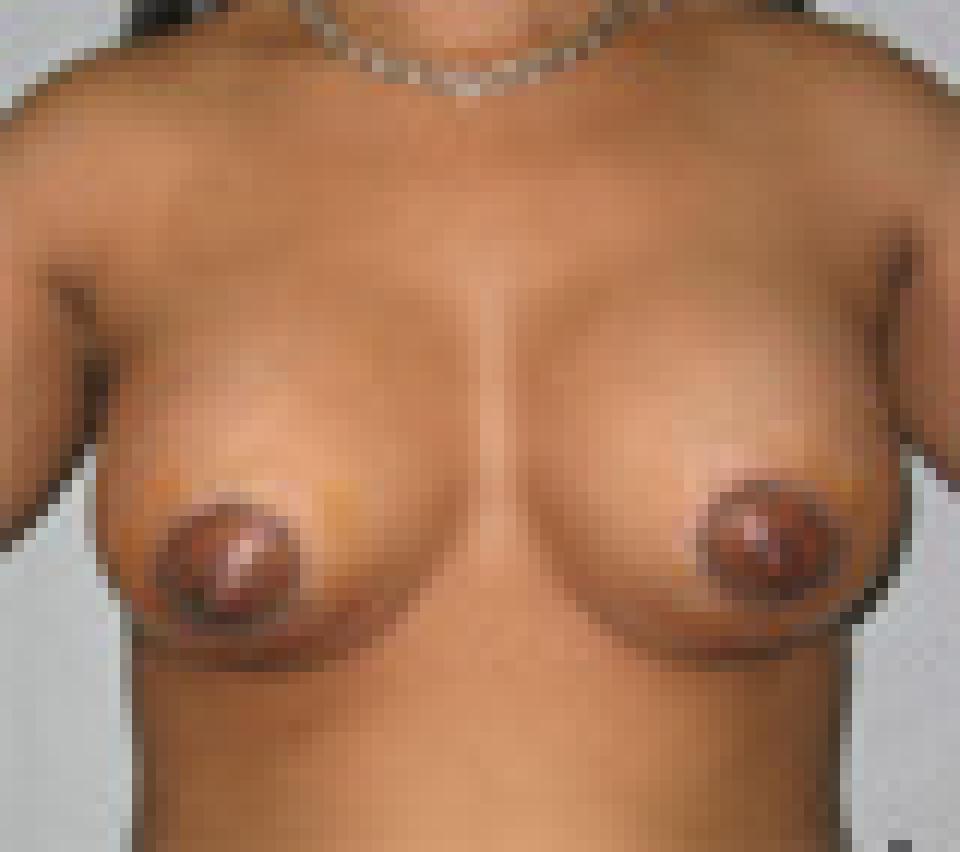
This case depicts a 24 year old woman with a tuberous breast deformity who underwent breast augmentation with 330 cc smooth, round, saline implants placed beneath the pectoralis muscles via a periareolar approach.
Her areolas were reduced simultaneously, necessitating an incision completely around the perimeter of the areola.The post-operative photographs depict her appearance at two weeks after surgery.
This case depicts a 30 year old woman who had undergone breast augmentation with 300 cc smooth, round saline implants placed above the pectoralis muscles via a periareolar incision by another surgeon approximately one year prior to her consultation with Dr. Belsley.
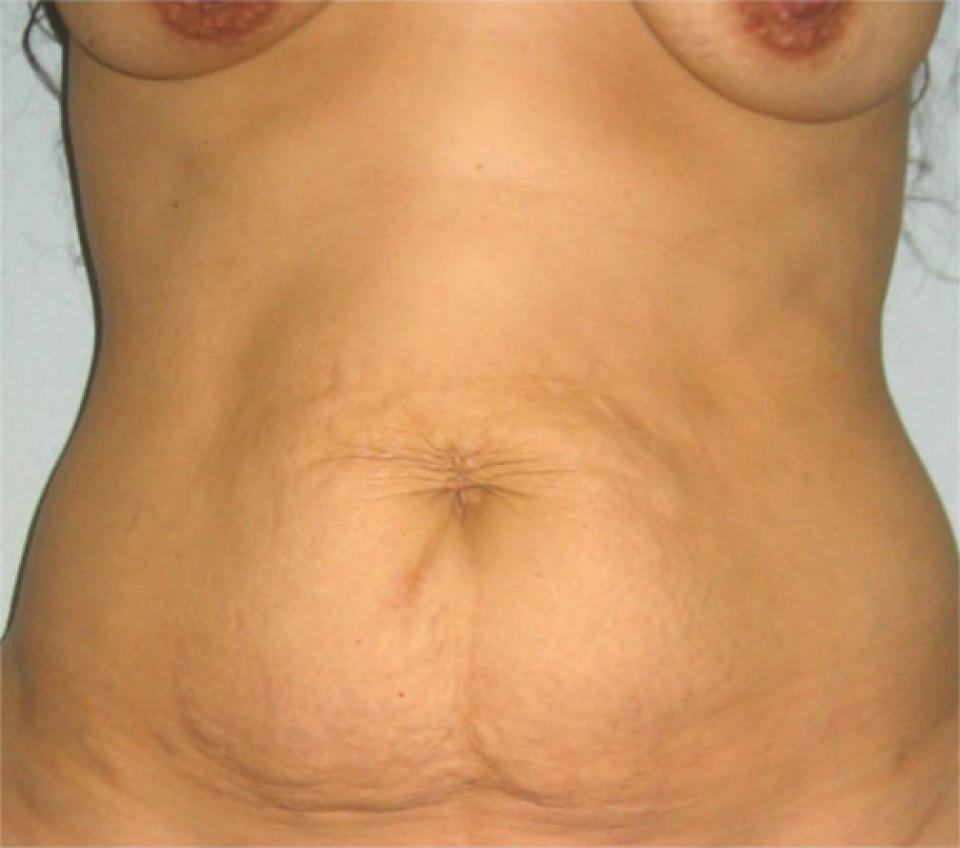
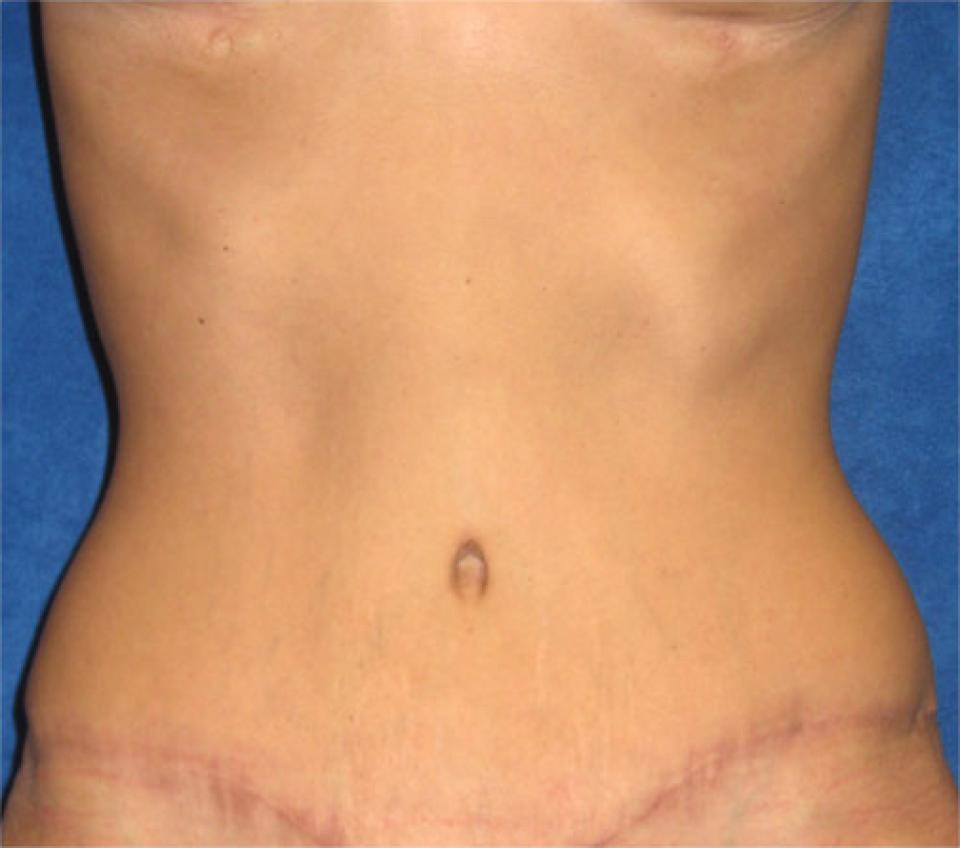
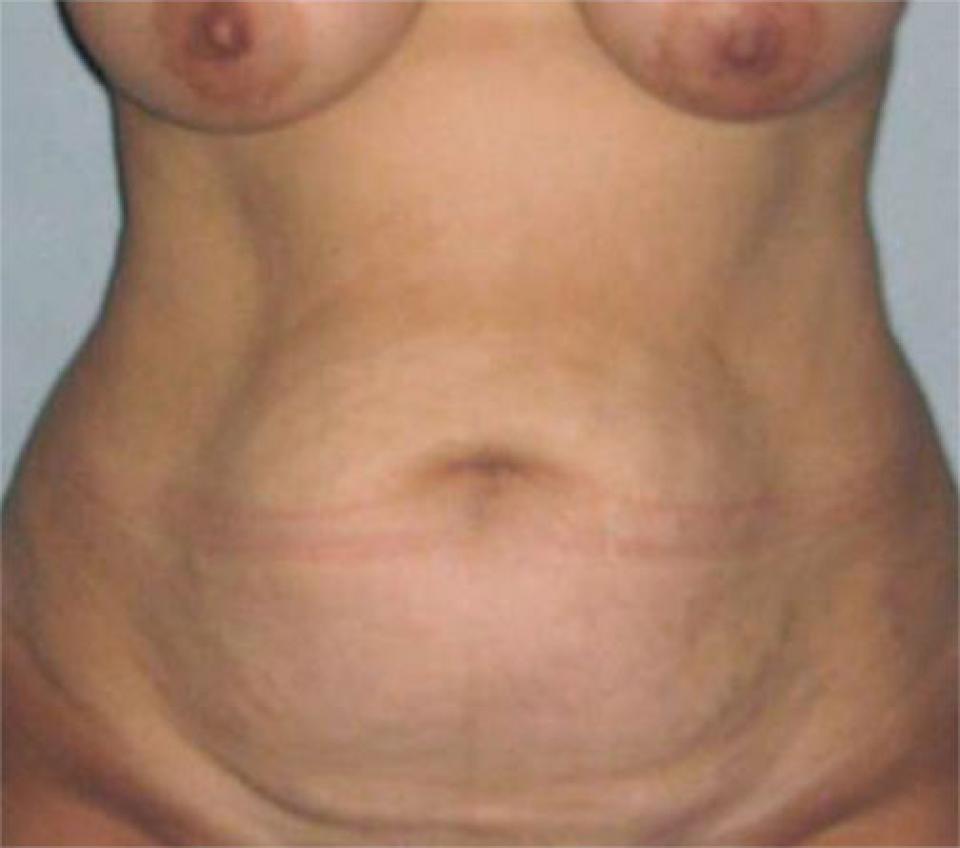
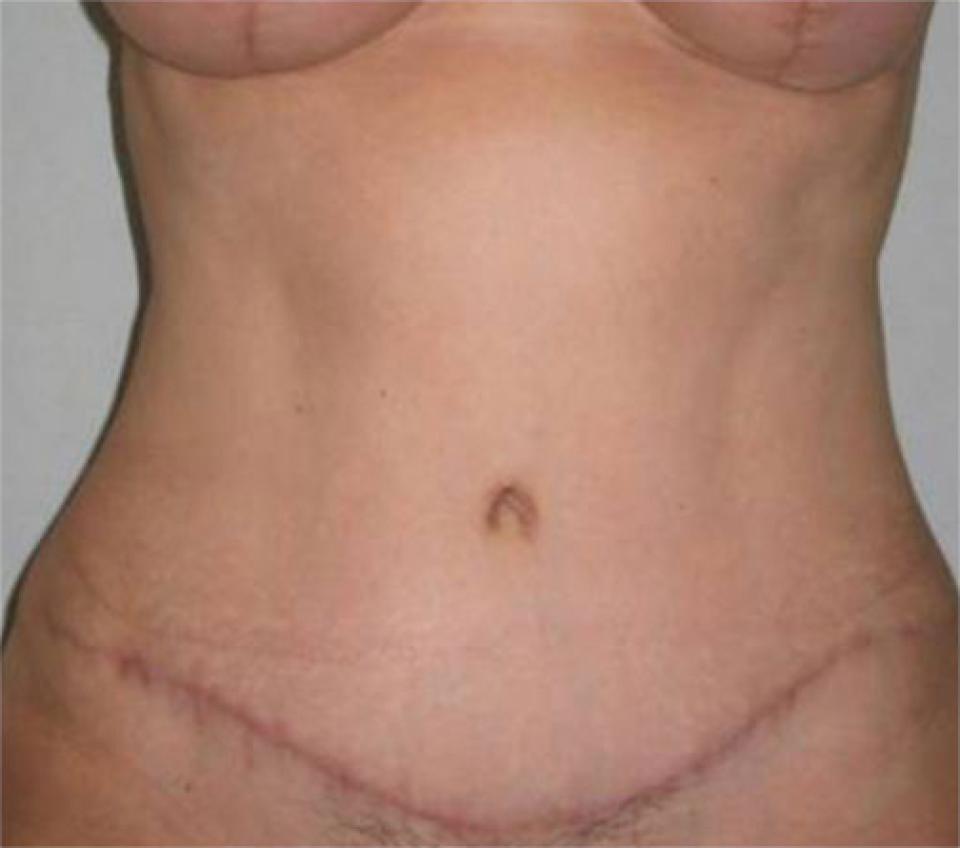
This case depicts a 37 year old woman who had borne a child and noticed several changes in the appearance of her abdomen post-partum. Her abdominal skin appeared to be sagging, her abdominal wall was less taught than it had been prior to her pregnancy and she had developed significant stretch marks.
Individuals such as this woman are optimal candidates for an abdominoplasty or "tummy tuck," as they have "stretched out" skin that would not respond well to liposuction. The post-operative photographs depict this woman's appearance approximately one year after surgery.
This case depicts a 51 year old woman who was delivered of two children by c-section. Both her abdominal skin and abdominal wall had been stretched during her pregnancy, giving her abdomen a less taught appearance. These post-partum changes are not typically response to diet or exercise.
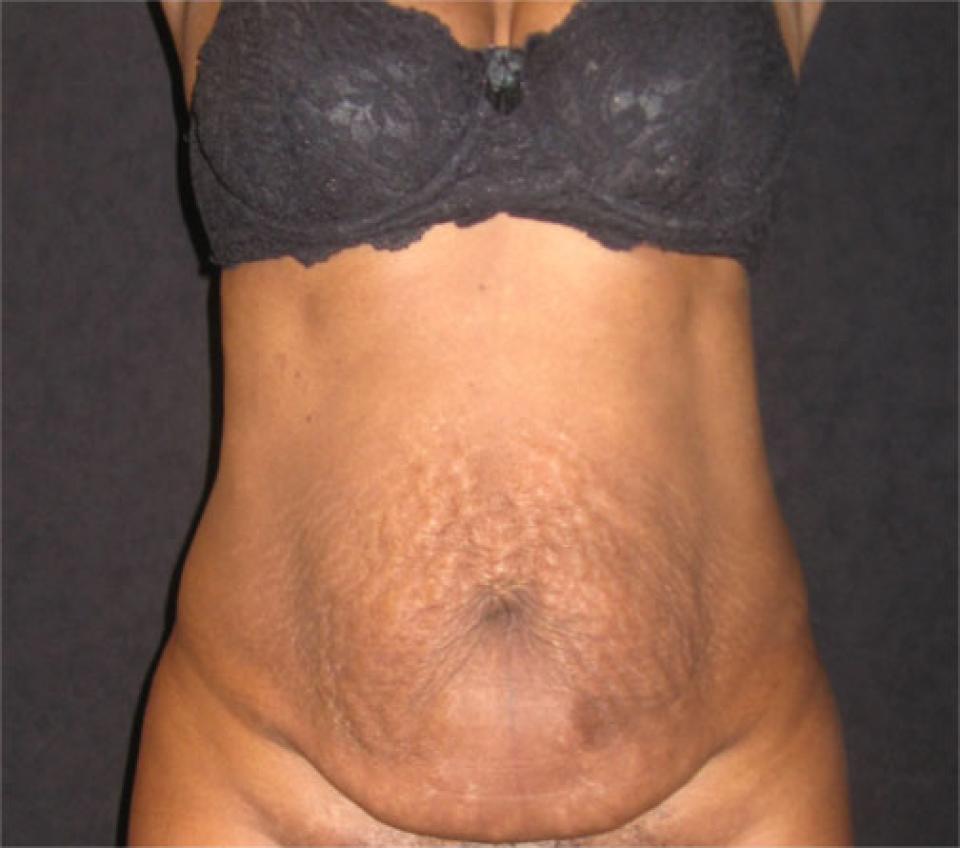
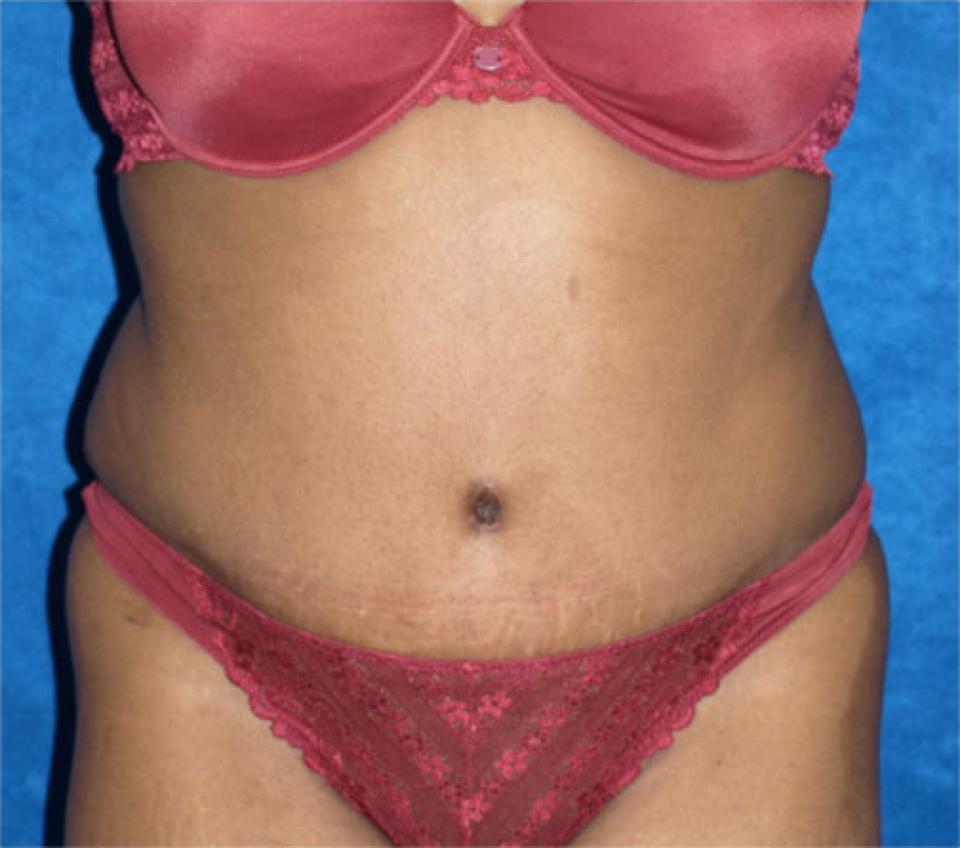
This case depicts a 44 year old woman who had borne four children and was most concerned with excess skin, which was severely affected with stretch marks, on her abdomen. Such individuals are optimal candidates for an abdominoplasty or "tummy tuck." While many of the stretch marks can be removed during this surgery, even those that remain are less noticeable when the skin is taught. An abdominoplasty is also designed to tighten the abdominal musculature, which may also be stretched or malpositioned as a result of pregnancy.
This case depicts a 29 year old woman who after bearing three children had become concerned with the protuberance of her abdomen. In this case, both stretching of the abdominal wall and excess fat beneath the abdominal skin were contributing to the unfavorable contour of her abdomen.
She had moderate but not severe stretch marks over her abdomen, the majority of which were removed in the surgery.